How to Train Your Hamster to Be Tame
Handling a small pet can be one of the joys of having it around, but not all pets enjoy being handled right away, including some new hamsters. Some hamsters need to be tamed before you can safely hold them. Thankfully there are a few tried and true steps you can take to get your hamster in your hands in no time at all. There are a few simple rules to follow to make sure your hamster is not stressed before you begin the training process.
Let a New Hamster Adjust
When you bring home a new hamster, give it a week or so to adjust to its new home and surroundings before you try to do much handling. Make sure your hamster has a good-sized cage and the other necessities for stress-free housing. Place your hamster's cage in a location where it will be around people but not disturbed by excess noise, other pets, and other distractions (especially during the day, when hamsters do most of their sleeping). Don't disturb or try to handle your hamster during the day when it is sleeping.
Prepare Yourself and Your Hamster
Taming a hamster requires time and patience. Don't rush through the steps. Take the time to get to know your hamster and respond to its cues. The key here is to earn your hamster's trust, so it can learn that there is no reason to be afraid of you.
Notice when your hamster has gotten comfortable in its environment. Work on taming and handling it only after it has emerged from its nest on its own. Signs of a relaxed hamster are that it is eating, drinking, and playing when you are present. Spend more time around your hamster's cage and quietly talk to it to get it used to your voice. If you don't know what to say, try reading a book out loud or singing softly.
Coax Your Hamster With Treats
Offer some favorite treats to your hamster from your hand. If you have a wire cage, start by offering treats through the bars of the cage. Otherwise, just offer them right at the edge of the cage door. Once your hamster scurries over for the treats, try putting your hand just inside the cage. Don't try to touch your hamster but rather let your hamster come over to explore your hand.

The Spruce / Adrienne Legault
Hold Your Hamster
Place the treat on your open hand inside the cage so that your hamster has to take the treat off of your hand (and perhaps place a paw or two onto your hand to get the treat). Again, don't force this, but let your hamster come to you. Next, try placing the treat on your hand so that your hamster has to climb on your hand to get it. Once your hamster is bravely doing this (and only then), try to gently and slowly scoop it up. The first few times your hamster will likely jump right out of your hand, but just be gentle and persistent and eventually, your hamster will realize your hands are safe.
The time between steps varies, especially depending on the age of the hamster and your hamster's personality. Your hamster may quickly accept being picked up or take treats from your hand right away, or it may take a month or more to be relaxed enough to do so.

The Spruce / Adrienne Legault
Let Your Hamster Move Around
The best way to pick up a hamster is cupped in the palm of your hand with the other hand over its back. It is best to begin picking your hamster up just above your lap or some other soft surface in case it falls or jumps.
As your hamster gets more comfortable, let it crawl from one of your hands to the other and over your arms. You can continue to offer treats, though your hamster may not be as interested in treats when there are new things to see and explore.
Problems and Proofing Behavior
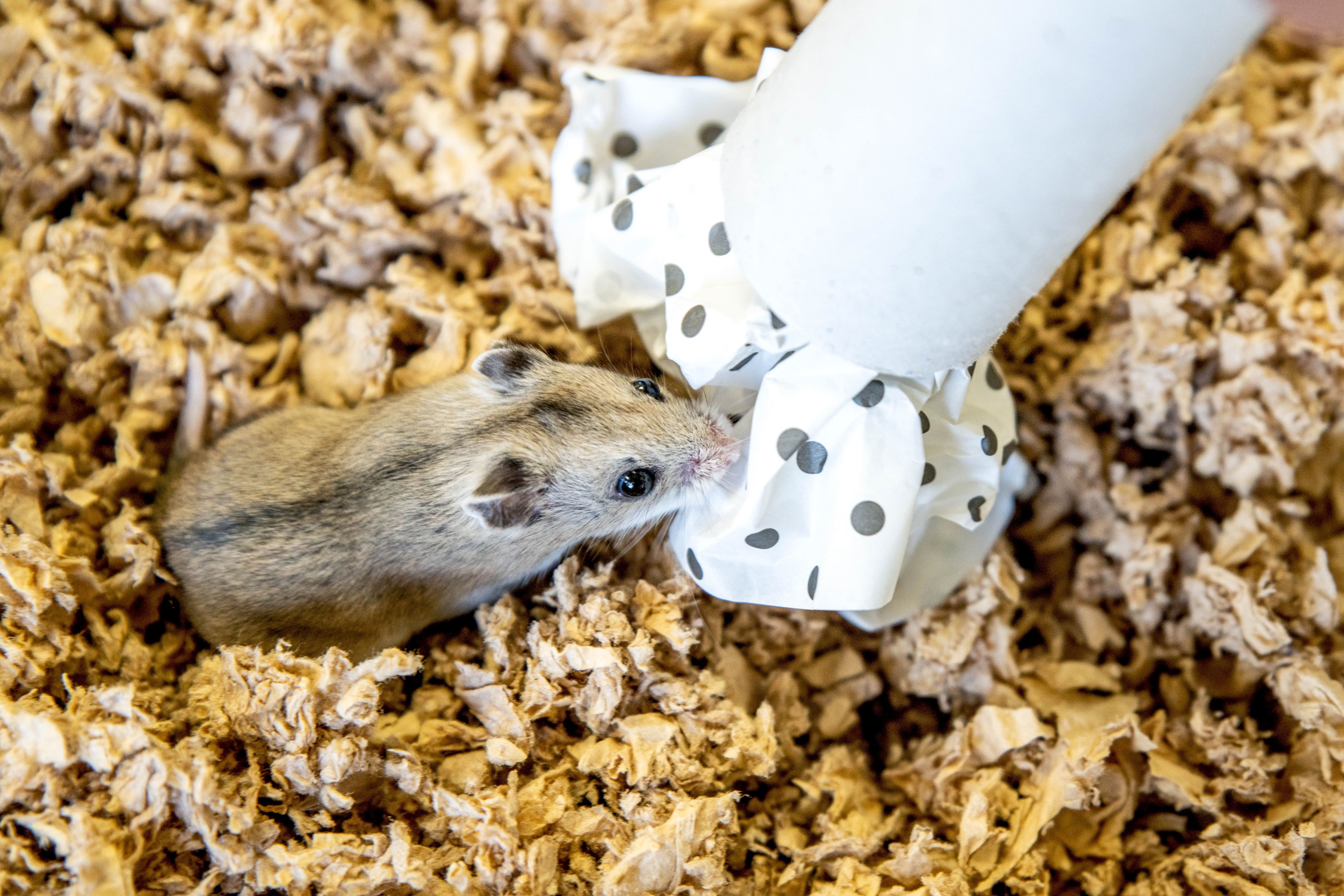
There may be a time you need to pick up a hamster that hasn't been tamed yet, such as to clean its cage. To do this, place a cup (or cardboard tube with paper stuffed in one end to close it off) on its side in front of the hamster and gently herd it into the cup (or tube). Most hamsters will walk right into the cup out of curiosity. Gloves or a thick towel can be used if you must pick up a hamster that bites, and if the cup method hasn't worked. This can be really stressful and cause your hamster to resist handling even more, so if it is necessary to use this method, take extra care to be as gentle as possible.
If your hamster bites you while you are handling it, know that it didn't mean to hurt you. The hamster just felt threatened. Try not to overact by yelling or harshly moving the hamster. If you do, it will become scared of you. Instead, calmly place it back in its cage and wash the bite with soap and water.
The Spruce / Adrienne Legault
Explore Dogs

The Best Diet for a Pet Raccoon
Raccoons make very interesting pets. They are curious, mischievous, playful, and get into everythin...
Read More
How to Care for a Pet Mexican Red-Knee Tarantula
Mexican red-knee tarantulas are actually two different spider species that are native to the Pacifi...
Read More
Can Chinchillas Get Wet?
Chinchillas are rodents that are originally from the Andes mountains in South America. They are tol...
Read More
How to Care for a Pet Chinese Hamster
Chinese hamsters, also known as Chinese striped hamsters or Chinese dwarf hamsters, are small roden...
Read More
How to Care for a Pet Robo (Roborovski) Hamster
The Roborovski hamster, known as the Robo hamster for short, is the smallest hamster species in the...
Read More
Angora Rabbit Breed Profiles
For homesteaders interested in raising angora rabbits for wool production, the show table, 4H, or a...
Read More
Bumblefoot in Rats
There are plenty of great reasons to keep your pet rats at a healthy weight and provide comfortable...
Read More
What to Do if Your Rabbit Has Overgrown Teeth
Rabbits have teeth that never stop growing and these teeth can become problematic. Knowing how to k...
Read More
How to Care for a Velveteen Lop Rabbit
Similar to the rex breed, a velveteen lop rabbit has an extremely soft and short coat but also has ...
Read More