Sickness in Rabbits
A healthy rabbit makes for a wonderful pet. Like other pets, though, your bunny must be cared for to avoid serious health conditions. Regular trips to the vet and a healthy diet can go a long way to ensure that your bunny stays healthy and happy, but keep an eye out of signs that your rabbit might be sick.
Why Do Rabbits Get Sick
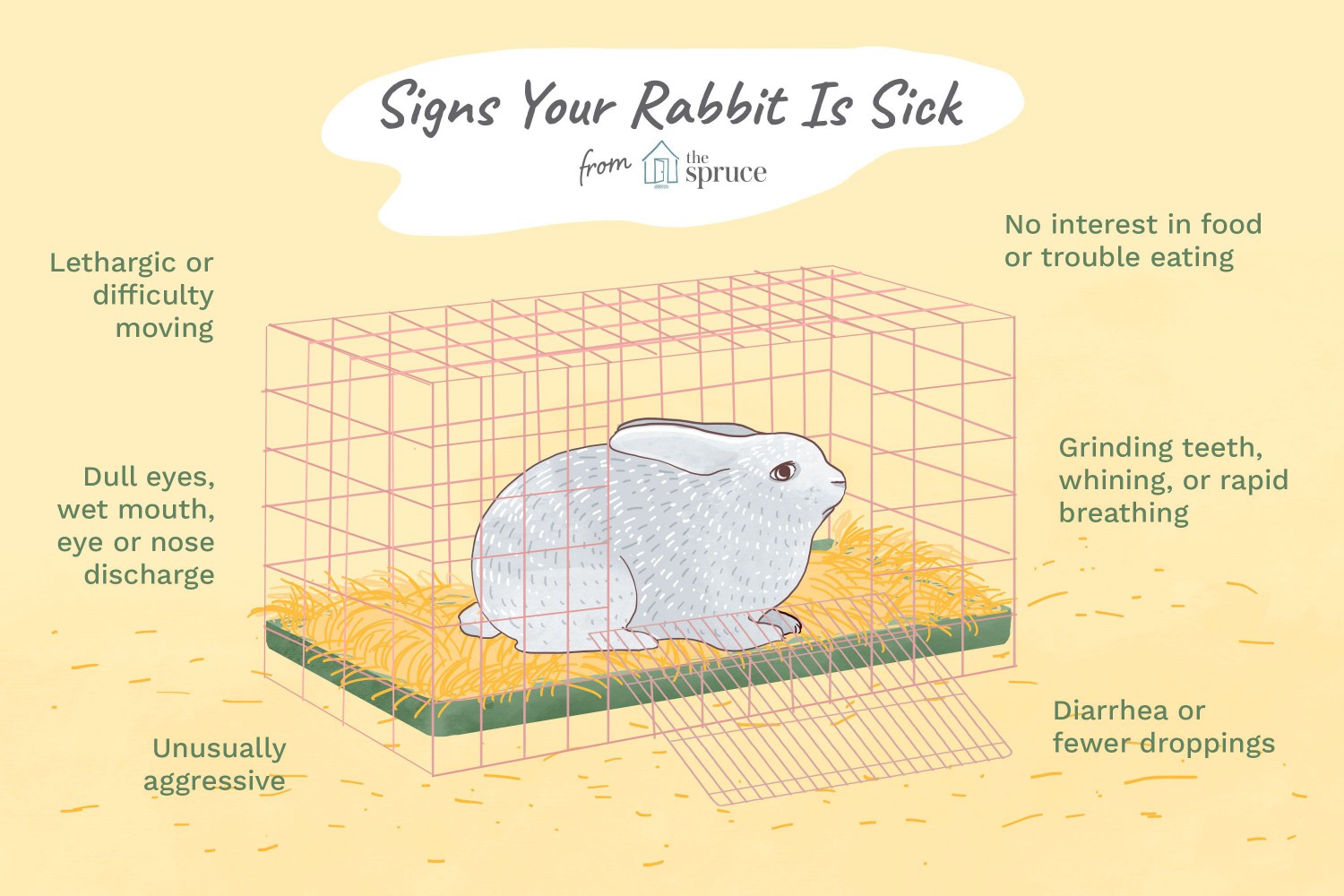
Like most pets, there are a number of reasons that rabbits get sick. They can be exposed to germs, eat something that causes sickness, be genetically predisposed to a condition, or other reasons. Because of their status at the low end of the food chain, rabbits typically hide signs of illness. Showing weakness puts them at risk of becoming prey. Of course, your pet probably isn't at risk of being eaten, but you still have to carefully observe it to catch early signs of sickness. Some common signs of illness include:
The Spruce / Melissa Ling
- Lowered energy and appetite: Rabbits show two significant signs of illness: decreased energy (or lethargy) and decreased appetite for both food and water. These are vague symptoms and can indicate any number of illnesses. Keep track of your rabbit's food and water consumption as it provides a quick way to spot if your pet is having health issues.
- Missing or excessive stools: Rabbit gastrointestinal stasis (RGIS) is a common rabbit illness sign that occurs when the animal stops eating. This slows everything in the digestive system down and the bunny stops dropping stools. GI stasis might be a result of an inadequate appetite, like a lack of fiber, dental issues, or a secondary problem such as liver disease or cancer. Diarrhea or loose stools can be a sign of trouble, too, indicating a potential parasitic or bacterial disease.
- Poor grooming habits: Bunnies are known for keeping themselves clean. Therefore, any signs that the rabbit hasn't been cleaning itself, such as fecal matter staining paws or matted fur, is a sign the rabbit is unwell. Drooling, slobby or missing hair on the creature's hair and neck are also all indicators of illness, potentially dental disease. Additionally, dandruff, overall fur loss, or a scaly coat can be a sign of an infection that could be contagious to other animals or even humans, such as in the case of "the walking dandruff mite," Cheyletiella parasitovorax.
- Cold symptoms: Rabbits can only breathe through their noses, so an upper respiratory tract disease is a serious health problem. If it looks like your rabbit is suffering from a cold with symptoms like nasal discharge, sneezing, coughing, breathing problems, including open-mouth breathing, it needs to be seen by a vet ASAP.
- Head tilt. If your bunny's head is listing to one side, the eye on that side seems to be having issues, or the rabbit has poor coordination, it could be suffering from a sudden onset of head tilt, a dysfunction of the system that controls the rabbit's balance.
Treatment
The treatment that a vet will prescribe will depend on the condition that the rabbit has. While you seek treatment, try to keep your rabbit hydrated and warm. A syringe with water or soft foods (applesauce or baby food) can assist. Depending on the condition, your vet may prescribe prescription medication to help your rabbit's condition. Illness can happen quickly with rabbits so make sure you have a vet that treats rabbits. Like other pets, rabbits should visit a vet at least once a year until age 4, when the visit should be scheduled for every 6 months. A vet has specialty knowledge that can catch rabbit illness signs before they blossom into a bigger health issue.
How to Prevent Illnesses
It's not entirely possible to prevent illnesses in rabbits. Practicing prevention will help. Feed them a healthy diet, provide a clean and loving environment, and take care to avoid extreme temperatures. Touching their bodies is just as important as monitoring their behavior for any illnesses. Your hands will let you know about any changes in body condition, and you'll spot lumps or injuries early. It's not as time-consuming as you might think. Rabbits will quickly adapt to physical attention and you'll get used to tending to them.
Explore Dogs
Laws on Exotic Animals for Each State
Every state has laws that determine what kind of animals can be kept as pets. These laws can change...
Read More
How to Care for a Pet Chinchilla
Chinchillas are small rodents native to rocky, arid regions in South America. They are typically ac...
Read More
Names for Pet Lizards
Finding the perfect name for any pet can be difficult. Unlike mammals such as cats and dogs, lizard...
Read More
Do Hedgehogs Get Along With Other Pets?
If you’re thinking of adding a hedgehog to your pet family, it’s a good idea to do your researc...
Read More
Mites in Hedgehogs
Mites are annoying and common parasites that bite and cause irritation to your hedgehog's skin,...
Read More
How to Care for a Pet Teddy Guinea Pig
Guinea pigs are large rodents that don't have tails, and their fur can come in a variety of texture...
Read More
Guinea Pig Musts: Must Have and Must-Not Items
Guinea pigs, also called cavies, need certain basics to ensure their health and happiness at home. ...
Read More
Eye Infections and Problems in Guinea Pigs
Guinea pigs, like many other exotic pets, are prone to eye problems. There are a variety of disease...
Read More
How to Travel With a Rabbit in a Car
Your rabbit may be happier staying with a pet sitter at home rather than coming along for a ro...
Read More